
Meet Dr. Delia Chiaramonte ("Dr. Delia")
Early in my career as a family physician, I began to notice the limits of what I had been taught in medical school.
Many of my patients were suffering in ways that medicine alone could not completely explain or relieve. Their tests were normal, but they felt exhausted. Their bodies ached, but there was no injury to treat. Their lives felt flat, but they were not clinically depressed. I wanted to help, but prescribing another medication was not always the answer.
I began exploring other ways to relieve my patients' suffering. Alongside good medical care, I introduced them to practical approaches that supported coping and wellbeing. We talked about the stress response and how thoughts can affect physiology. I taught them breathing techniques, guided imagery, meditation, better sleep habits, healthy movement, and other evidence-informed practices that they could use in their everyday life.
To my surprise, many of them improved. Their pain lessened. They slept better. Their anxiety lifted. They felt more like themselves again.
That experience sparked my interest in integrative medicine. I eventually spent more than a decade as Associate Director and Director of Education at the University of Maryland School of Medicine’s Center for Integrative Medicine.
Around the same time, I began working in hospice and fell in love with caring for families facing serious illness.
I loved the depth of the conversations, and I was inspired by the courage of the patients and families I met. Again and again, I saw people who were facing their mortality become clearer about what truly mattered to them.
They spent more time with the people they loved. They let go of arguments that no longer seemed important. They worried less about what other people thought and invested more deeply in the relationships that mattered. They reflected on the lives they had lived and created legacies for the people they would leave behind.
I went on to become board certified in hospice and palliative medicine, and I saw tremendous value in combining the whole-person perspective of integrative medicine with the communication, symptom management, and family-centered approach of palliative care.
As Division Chief of Integrative Palliative Medicine at Greater Baltimore Medical Center/Gilchrist, I had the privilege of walking beside thousands of patients and families during some of the hardest moments of their lives.
Over time, I noticed that I was caring for two kinds of families.
Some families found a way to grow closer in the midst of illness. They were heartbroken, of course, but they did not feel defeated. They found meaning in facing illness together, strengthened important relationships, and discovered reserves of courage they had not known they possessed.
Other families felt overwhelmed. They struggled with conflict, isolation, fear, and exhaustion. Serious illness consumed every part of their lives.
Both groups were living through devastating illnesses.
The difference was not the diagnosis. It was their experience of the diagnosis.
When I taught the struggling families practical skills for communication, coping, decision making, emotional awareness, and navigating uncertainty, their experience began to change. The illness was still there, but they no longer felt as powerless to cope with it.
That observation has shaped every chapter of my career.
Today, my work is built on one central belief: When we cannot change what is happening, we can still change how people experience it.
The question that first captured my attention as a young physician still guides my work today:
How do we improve the experience of serious illness when we cannot change the illness itself?
I have spent my career looking for better answers.
How IPI Was Born
My Work Today
Today, I work with healthcare organizations, professional societies, universities, and interdisciplinary teams who want to improve the experience of serious illness for patients, families, and the professionals who care for them.
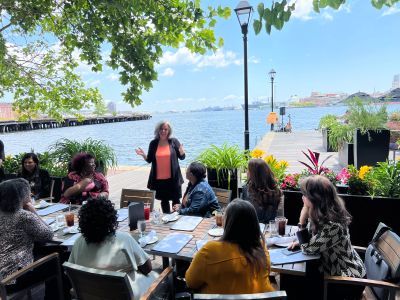
As a speaker, I challenge audiences to think differently about serious illness. I combine evidence, clinical experience, and stories from real practice to help healthcare professionals communicate more effectively, support families more skillfully, and rediscover the meaning in the work they do.
As an educator, I develop courses, curricula, and learning experiences that translate complex ideas into practical skills clinicians can use immediately.
As a consultant, I partner with healthcare organizations to strengthen communication, support family-centered care, develop clinicians, and build programs that improve both patient care and the experience of providing it.
The Integrative Palliative Institute grew out of this work. It is dedicated to advancing whole-person care by equipping healthcare professionals with the knowledge, skills, and perspective to care for patients and families with both clinical excellence and deep humanity.
No matter the setting, my goal is always the same: to help healthcare professionals recognize that even when they cannot change the course of an illness, they still have tremendous power to influence how it is experienced.
Experience & Credentials
Certifications
- Board Certified, Family Medicine
- Board Certified, Hospice & Palliative Medicine
- Certified, American Board of Integrative Holistic Medicine
Leadership
- Founder, Integrative Palliative Institute
- Former Director of Medical Education, McGraw Hill Professional
- Former Division Chief, Integrative Palliative Medicine, Greater Baltimore Medical Center/Gilchrist
- Former Associate Director and Director of Education, University of Maryland School of Medicine Center for Integrative Medicine
Academic Appointments
- Johns Hopkins
- University of Maryland
- University of California, Irvine
Author & Thought Leadership
- Author of Coping Courageously
- Peer-reviewed publications
- National and international presentations

What I Hope For
I hope for a healthcare system that recognizes that excellent care is about more than diagnosing disease and choosing the right treatment.
I hope we become just as intentional about the conversations we have as the medications we prescribe.
I hope families receive the guidance they need instead of being left to figure things out on their own.
I hope clinicians leave work feeling that they made a difference, not only because of the medical care they provided, but because of how they helped people live through one of the hardest experiences of their lives.
Most of all, I hope we stop thinking of serious illness as something that simply happens to people.
Even when we cannot change the illness, we can profoundly influence the experience.
I believe that is some of the most important work in healthcare.